Most perception teams label far more data than their models actually need. Frames pile up from deployed robots, and the bulk of them cover scenarios the model already handles well. Meanwhile, the data that would actually improve the model sits buried in the noise, unlabeled or underrepresented.
With active learning, the model identifies gaps in its own knowledge and signals which unlabeled samples are actually worth labeling. Rather than treating every frame as equally important, annotation effort flows toward the data that will move model performance forward. For perception teams working across diverse robotic applications, this focused approach can reshape how the entire data pipeline operates.
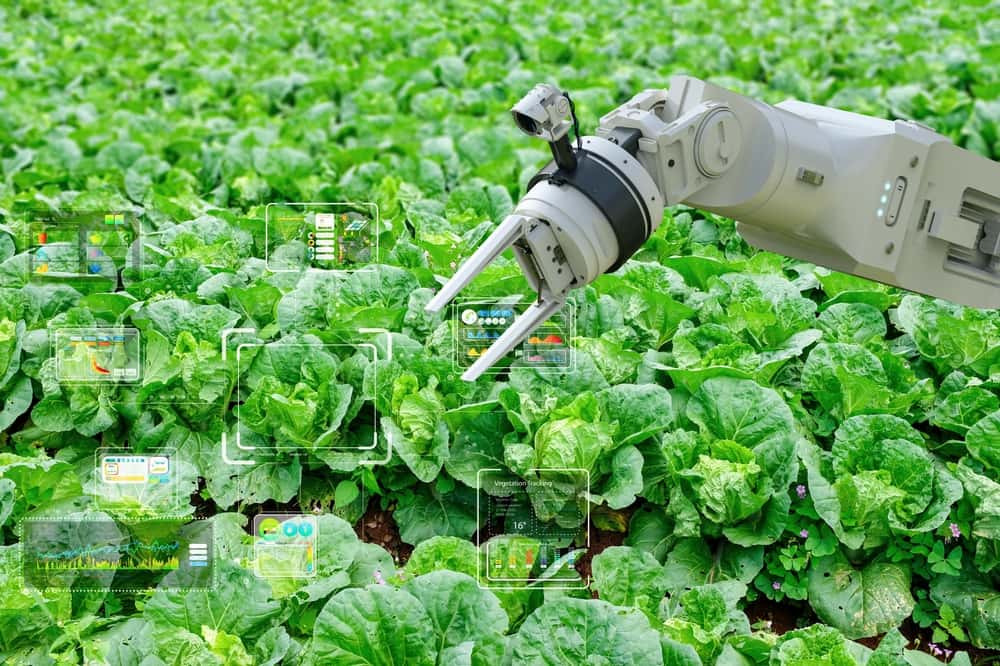
Why Robotics Perception Needs Active Learning for Data Annotation
The Redundancy Problem in Robotic Sensor Data
A warehouse robot might capture millions of frames per week, but the vast majority show repetitive, well-understood scenes. The frames that actually matter are the rare ones: a partially occluded pallet, an unexpected object on the floor, or a lighting change that throws off depth estimation.
Edge Cases Drive Annotation Complexity
According to iMerit’s 2023 State of MLOps report, 82% of data scientists said data annotation requirements are becoming increasingly complex, and 96% identified solving edge cases as important or extremely important to commercializing AI. The long tail of edge cases is where models break, and brute-force annotation can’t efficiently address it.
Core Components of Active Learning in Robotics Data Annotation
Active learning solves this by creating a feedback loop between the model and the annotation process. The model flags the data it finds most informative, and human annotators concentrate their expertise on those specific samples.
Uncertainty Estimation and Query Strategies
The model must be able to quantify how confident it is about a given prediction. Common approaches include Monte Carlo dropout, ensemble disagreement, and entropy-based scoring. For robotics, where perception models handle multi-sensor inputs like cameras, LiDAR, and radar simultaneously, uncertainty estimation becomes more complex because confidence has to be assessed across multiple modalities.
A query strategy then decides which samples to send for annotation. Uncertainty sampling selects the samples where the model is least confident, while more sophisticated strategies incorporate diversity sampling or expected model change to maximize impact on the model’s learned parameters.
The Human Annotation Layer
Robotics data needs specialized expertise. Annotators labeling 3D point clouds need to differentiate between objects at varying depths, and those working on multi-sensor fusion data must maintain spatial and temporal consistency across modalities. This is where domain expert annotators make the biggest difference, bringing the specialized knowledge needed to accurately label the samples that matter most.
Once new annotations are integrated, the model retrains, generates updated uncertainty scores, and a fresh batch of high-value samples is queued for annotation.
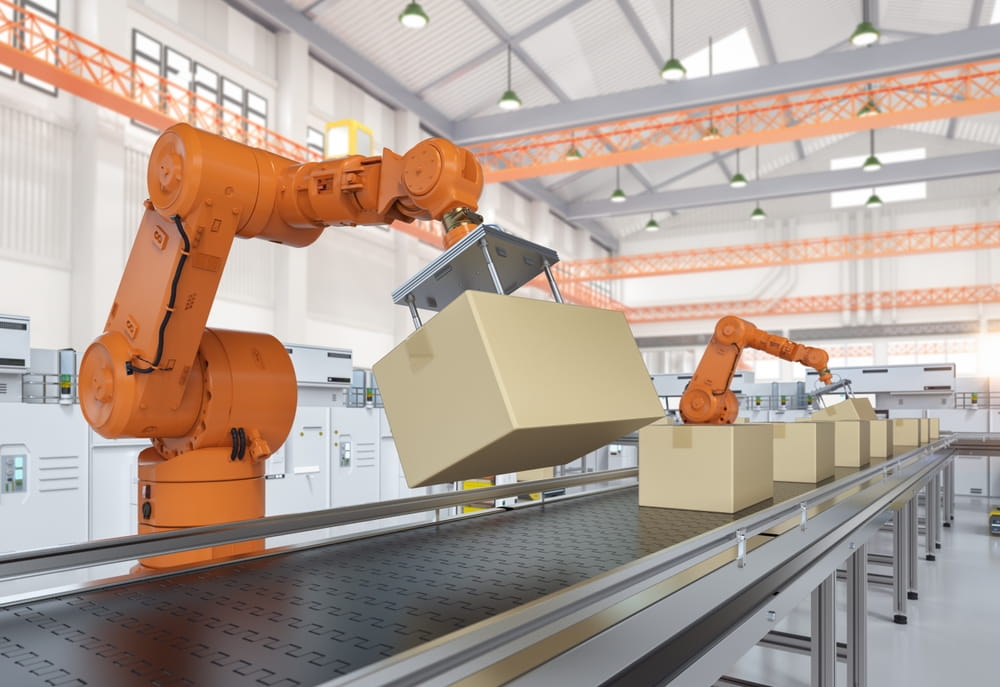
Designing Closed-Loop Active Learning Pipelines for Robotics Perception
Balancing Exploration and Exploitation
A pipeline that only queries the most uncertain samples may converge on a narrow slice of the data distribution, missing important but underrepresented scenarios. Diversity-aware sampling strategies help the model generalize across the full range of operating conditions. A delivery robot might encounter construction zones rarely, but failing to perceive them correctly has serious consequences.
Minimizing Latency and Ensuring Quality
Active learning works best when the feedback loop is tight. If weeks pass between data collection, annotation, and retraining, the model’s uncertainty estimates become stale. Teams that automate annotation routing through APIs and use pre-annotation models to accelerate labeling can shrink cycle times significantly.
Quality assurance should also be built into the pipeline. Since active learning selectively targets difficult samples, annotation errors on those samples have an outsized impact on model performance. Multi-stage review workflows with benchmark tasks and real-time issue resolution help maintain the accuracy that perception models depend on.
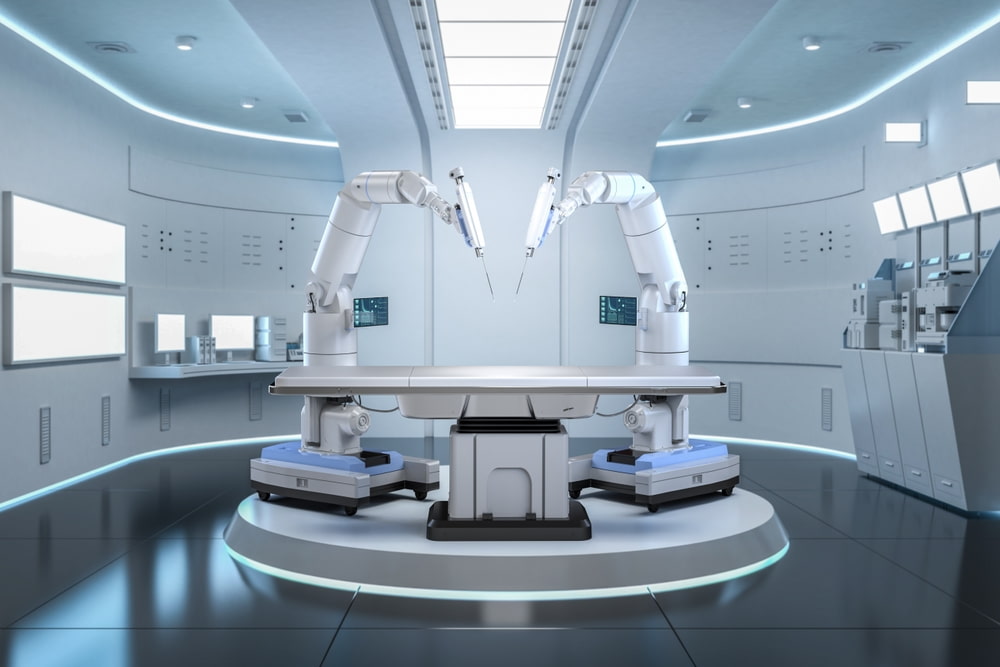
How iMerit Enables Active Learning for Robotics Data Annotation
Robotics-Ready Annotation at Scale
iMerit supports active learning workflows through a combination of innovative technology and human expertise built for robotics perception. With over 10 years of experience in autonomous mobility and more than 2 billion data points created for autonomous use cases, iMerit’s teams handle the annotation types that robotics applications demand: 3D point clouds, multi-sensor fusion, panoptic segmentation, semantic segmentation, bounding boxes, polygon annotation, and object tracking.
Platform Infrastructure and Domain Expertise
iMerit’s Ango Hub platform provides the infrastructure for closed-loop pipelines with API integration, webhook-based task routing, and real-time analytics. Pre-trained auto-detection models accelerate annotation on routine frames, freeing expert annotators to focus on the high-uncertainty samples that active learning prioritizes.
iMerit’s domain-specialized annotators bring the expertise needed for complex robotic environments across household, medical, logistics, agriculture, warehouse, industrial automation, and aerial delivery applications. Our ability to resolve ambiguous cases and handle nuanced taxonomies directly improves the quality of the annotations that matter most in an active learning framework.

Partner with iMerit to Scale Active Learning for Your Robotics Perception Models
Strong perception models depend on strong data, and getting that data right at scale is a hard problem to solve alone. iMerit brings together automation, human domain experts, and analytics into a single, integrated annotation solution built for the complexity of robotics workflows. Whether you’re training models for warehouse navigation, agricultural robotics, medical robotics, or last-mile delivery, our robotics teams can help you build the active learning pipeline your perception models need.
Contact our experts today to get started.