Computer vision empowers computers with the ability to understand, label, and interpret images. With the right image datasets, a data scientist can teach a computer to essentially function as though it had eyes of its own. This technology drives many of tomorrow’s most important breakthroughs and innovations, from facial recognition and autonomous vehicles to medical imaging and satellite analysis.
The following 32 free image datasets contain a diverse swathe of images, including video sequences, multiple camera angles around the same subject, and even multi-dimensional medical scanner data.
Image Datasets for Computer Vision Training
VisualQA: Among image datasets, VisualQA is notable for its open-ended questions around the roughly 265,000 images contained within.
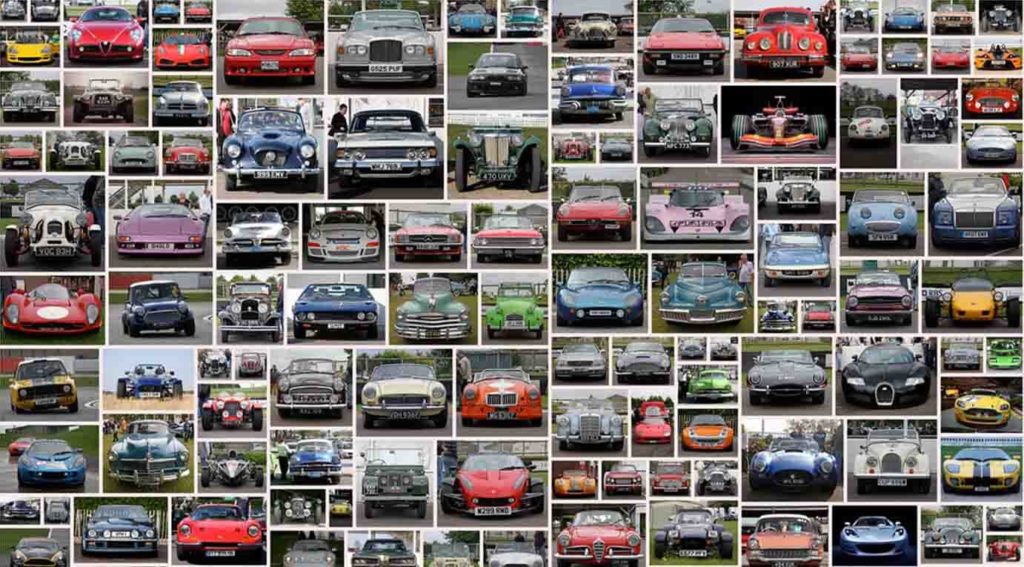
CompCars: This image dataset features 163 car makes with 1,716 car models, with each car annotated and labeled around five attributes, including number of seats, type of car, max speed, and displacement.
Oxford-IIIT Pet Images Dataset: This pet image dataset features 37 categories with 200 images for each class. The images vary based on their scale, pose, and lighting, and have an associated ground truth annotation of breed, head ROI, and pixel-level trimap segmentation.
CIFAR-10: One of the larger image datasets, CIFAR-10 features 60,000 32×32 color images divided into 10 separate classes. Each dataset is also divided into five training batches and one test batch, with each containing 10,000 images.
Indoor Scene Recognition: This dataset is highly specialized for anyone training a model to recognize indoor scenery. Contained within are 67 indoor categories across 15,620 images.
Plant Image Analysis: This is a compilation of several image datasets that features a whopping 1 million images of plants, with the choice of roughly 11 species of plants.
Home Objects: Contains commonly found objects from around the house, making it a practical resource for training computer vision models on everyday environments.
CelebFaces: This image dataset features over 200,000 images of celebrities, with each image accompanied by 40 attribute annotations.
Stanford Dogs Dataset: It features 20,580 images of dogs across 120 unique breed categories with roughly 150 images for each class.
Fishnet Open Images Dataset: Perfect for training face recognition algorithms, Fishnet Open Images Dataset features 35,000 fishing images that each contain 5 bounding boxes.
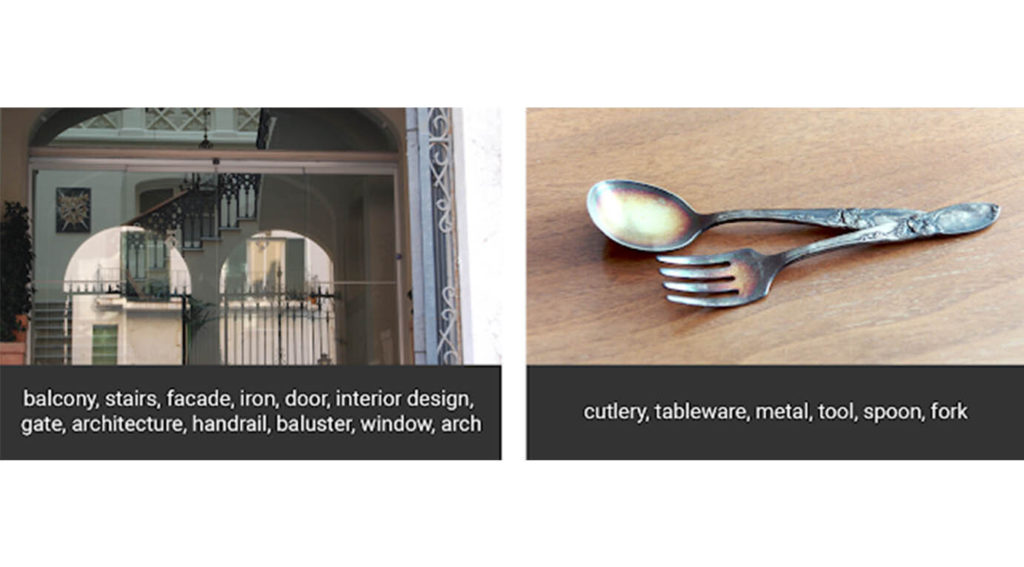
Google’s Open Images Dataset V7: The latest version of Google’s flagship open image dataset, featuring over 9 million images annotated with labels spanning 600+ object classes, 7,000 visual relationship types, and instance segmentation masks. V7 expands on previous versions with enhanced annotation quality and additional task-specific subsets, making it one of the most comprehensive free image datasets available for computer vision training.
Columbia University Image Library: Featuring 100 unique objects captured from every angle within a 360-degree rotation, ideal for training multi-angle object recognition models.
MS COCO: MS COCO is among the most detailed image datasets, featuring a large-scale object detection, segmentation, and captioning dataset of over 200,000 labeled images.
Lego Bricks: This image dataset contains 12,700 images of Lego bricks that have each been previously classified and rendered.
Labelme: One of MIT’s computer vision image datasets created in conjunction with the Artificial Intelligence Laboratory (CSAIL), this one features 187,240 images, 62,197 previously-annotated images across 658,992 labeled objects.
ImageNet: Organized in accordance with the WordNet hierarchy, ImageNet is among the go-to image datasets for benchmarking new algorithms. Each node within the WordNet hierarchy is depicted in hundreds of thousands of images.
VisualGenome: VisualGenome was created to connect language with organized image concepts, and features a detailed visual knowledge base with 108,077 previously captioned images.
YouTube-8M: This large-scale dataset comes labeled with millions of YouTube video IDs, along with annotations of 3,800+ visual entities. Entities that aren’t localizable, like movies or TV series, are excluded.
FERET: FERET (Facial Recognition Technology Database) is an image dataset featuring over 14,000 annotated images of human faces, widely used in computer vision training for identity verification.
Labeled Faces in the Wild: Labeled Faces in the Wild features 13,000 labeled images of human faces and is especially useful for facial recognition computer vision solutions.
Places: This scene-centric image dataset contains 205 unique scene categories with 2.5 million images labeled within each category.
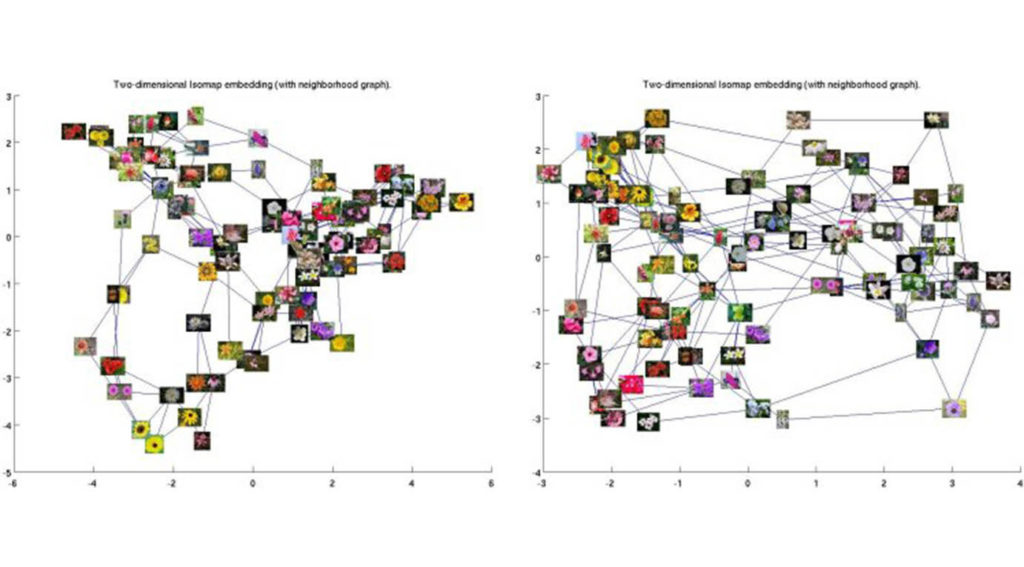
Flowers: Featuring flowers commonly found across the UK, this image dataset contains over 102 different categories with each flower seen from different poses and light variations.
xView: Features over 1 million objects across complex scenery and large images, making it one of the largest publicly available overhead image datasets for computer vision applications.
PascalVOC: Also known as Pascal Visual Object Classes, this dataset is aimed at improving visual object recognition and provides a substantial dataset and tools on a specialized platform. With 20 classes, the training and validation data has 11,530 images, 27,450 ROI annotated objects, and 6,929 segmentations.
Cityscapes: Features a diverse collection of stereo video sequences from street scenes in 50 different cities. Notable for its high-quality, pixel-accurate annotations across 5,000 frames, it also includes 20,000 frames with coarse annotations, making it a staple for autonomous driving computer vision training.
VGGFace2: Also known as the Visual Geometry Group dataset, VGGFace2 contains nearly 3.31 million images across 9,191 classes, each representing a unique individual. It is utilized for a range of tasks including face detection, recognition, and landmark localization.
IMDB-WIKI: This dataset includes 460,723 face images from 20,284 celebrities indexed on IMDb, complemented by an additional 62,328 images from Wikipedia, totaling 523,051 images useful for facial recognition training.
SUN Database: Scene Categorization Benchmark or Scene UNderstanding database contains over 130,000 images and 900 categories, each annotated to provide precise scene recognition. It is essential for SV applications such as scene layout analysis, scene classification, and object detection, across different contexts.
ROVR.Network: ROVR.Network provides image and multimodal datasets useful for computer vision applications such as detection, segmentation, and classification. It serves as a discovery platform where researchers can explore datasets beyond commonly used repositories.
LAION-5B: One of the largest openly available image–text datasets, LAION-5B contains approximately 5 billion image-text pairs sourced from the web, making it a powerful resource for training large-scale multimodal computer vision models.
Re-LAION-5B: An updated, cleaned version of the original LAION-5B, Re-LAION-5B filters out unsafe and low-quality content to produce a more reliable web-scale image dataset suited for responsible computer vision training.
nuScenes: A large-scale multimodal dataset for autonomous driving, nuScenes features data collected from a full sensor suite including 6 cameras, 1 LIDAR, 5 RADAR, GPS, and IMU. It contains 1,000 driving scenes with 1.4 million camera images and 390,000 LIDAR sweeps, all fully annotated with 3D bounding boxes for 23 object classes.
Power Your Next Computer Vision Breakthrough with iMerit
With over 100 million images and videos labeled, annotated, and segmented, iMerit empowers computer vision algorithms across autonomous vehicles, robotics, healthcare, retail, and beyond. Our teams leverage a wide range of techniques including semantic segmentation, bounding-box annotation, and LiDAR point cloud labeling to deliver precise, production-ready datasets at scale.
Contact our team of experts today to get started on your next computer vision project.